
Microservices: A Modern Architecture for Scalable Applications
A clear and practical introduction to microservices—how they work, why they emerged, and the benefits and challenges they bring to modern software development.
Introduction
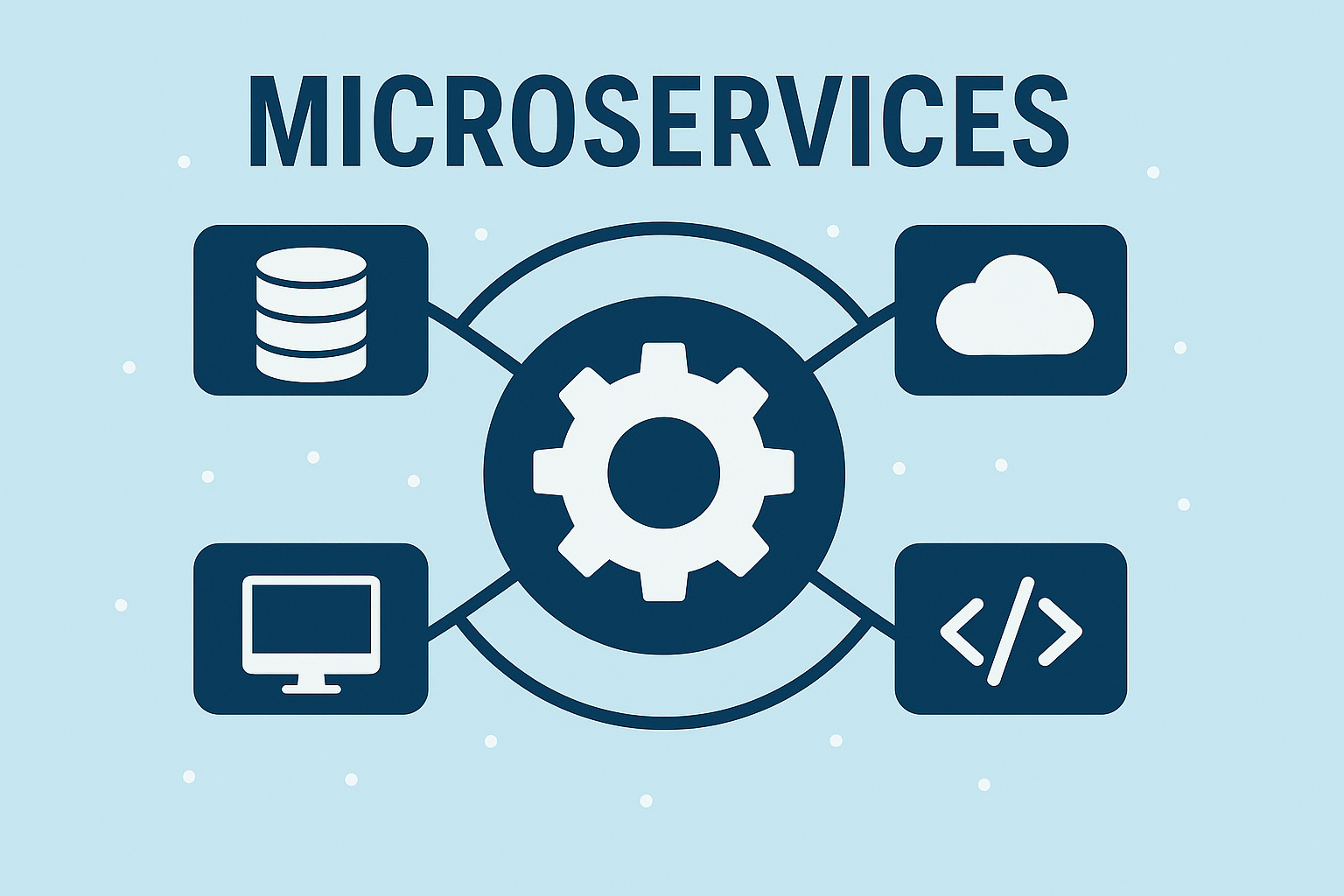
Microservices have revolutionized the way modern software is developed and deployed. Instead of building large monolithic applications, microservices allow applications to be divided into smaller, independent services that communicate with each other. This architectural style is now a key foundation for cloud applications, CI/CD pipelines, and highly scalable systems.
This article explains what microservices are, why they are important, and how organizations benefit from them.
What Are Microservices?
Microservices are an architectural approach where an application is composed of many small, autonomous services. Each service is:
- independently deployable
- focused on a single function
- easily replaceable or extendable
- connected through APIs
Unlike monolithic applications, where all components are tightly coupled and deployed together, microservices enable loose coupling, flexibility, and scalability.
Why Did Microservices Emerge?
As web and cloud applications grew, monolithic architectures quickly ran into limitations:
- long release cycles
- hard-to-maintain code
- difficulty scaling individual components
- increasing complexity
Companies like Amazon, Netflix, and Google needed more flexible systems. Microservices provided the solution: independent components that can be scaled and updated without affecting the entire system.
Benefits of Microservices
Microservices offer several key advantages:
1. Scalability
Each service can be scaled independently. High demand on one module (e.g., login, search) does not affect the rest of the application.
2. Faster Development
Teams can work autonomously on different services, enabling parallel development.
3. Technology Diversity
Each service can use different programming languages or tools, as long as API conventions are followed.
4. Improved Fault Tolerance
If one service fails, the rest of the system remains operational, unlike monolithic apps where a single failure can bring down the entire system.
5. Optimized for CI/CD and DevOps
Microservices integrate well with automated pipelines, containers, and orchestrated deployment processes.
Challenges of Microservices
Despite their advantages, microservices come with challenges:
- Complex infrastructure: Multiple small services require monitoring, logging, security, and communication management.
- Network dependency: Services communicate via APIs, which introduces latency and potential network failures.
- Orchestration is essential: Tools like Kubernetes or Docker Swarm are needed to manage services effectively.
- Data consistency: Distributed systems complicate transactions and data modeling.
Microservices are particularly beneficial for medium to large-scale projects or systems with high scalability needs.
Microservices in Practice
Modern microservice architectures often rely on:
- Docker for containerization
- Kubernetes for orchestration
- API Gateways (e.g., Kong, NGINX, Istio)
- Event-driven communication (e.g., Kafka, RabbitMQ)
- DevOps tools for deployment and observability
Organizations use microservices to accelerate innovation, improve reliability, and respond more effectively to user growth.
Conclusion
Microservices are a cornerstone of modern software development. They enable flexible scaling, faster releases, and robust system architecture. However, they are not a silver bullet: proper design, the right tools, and experienced teams are required.
When implemented correctly, microservices provide a system architecture that is flexible, scalable, and future-proof—perfect for the demands of today’s digital world.